info@poolervet.com
Signs Your Dog May Have Dental Disease (And How to Catch It Early)
Book Online

Your dog cannot tell you their mouth hurts. That is what makes dental disease so dangerous. By the time most pet owners notice something is wrong, the problem has often been developing for months. Dental disease is one of the most commonly missed conditions in dogs, yet it affects an estimated 80% of dogs by age three. Learning to spot the early dog dental disease signs can protect your pet from pain, tooth loss, and infections that spread beyond the mouth. This article walks you through what to look for, what causes it, how vets diagnose and treat it, and what you can do at home to keep your dog’s teeth in better shape starting today.
What Is Dental Disease in Dogs?
Dental disease is not just bad teeth. It is a progressive condition that starts with plaque buildup and can advance to gum inflammation, bone loss, and systemic infection if left untreated.
It begins when bacteria in the mouth mix with saliva and food particles to form plaque. Plaque hardens into tartar within days. Tartar builds up along the gumline, causing irritation and eventually infection of the structures that hold teeth in place.
Dental disease affects an estimated 80% of dogs over age three. Small and toy breeds are especially prone to it due to how their teeth are spaced. Many pet owners are surprised to learn their dog’s “doggy breath” is not normal. It is usually one of the first signs that dental disease has already begun.
What Are the Early Signs of Dental Disease in Dogs?
Early dental disease rarely causes obvious pain. Most dogs continue eating and playing normally, which is why regular monitoring matters.
Watch for these warning signs:
- Bad breath that does not go away. A mild, meaty smell after eating is normal. A persistent foul or sulfur-like odor is not.
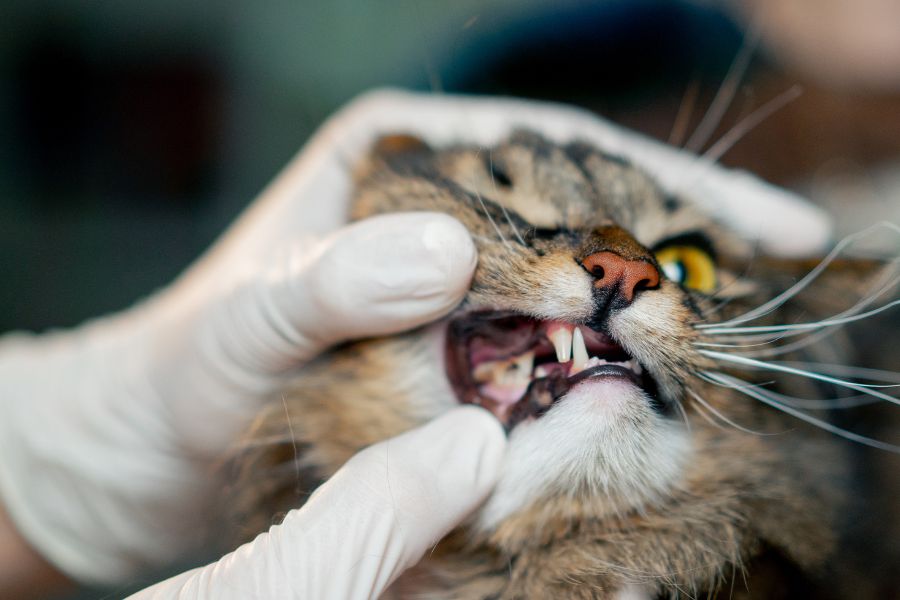
- Yellow or brown buildup near the gumline. This is tartar. It will not brush off and requires professional removal.
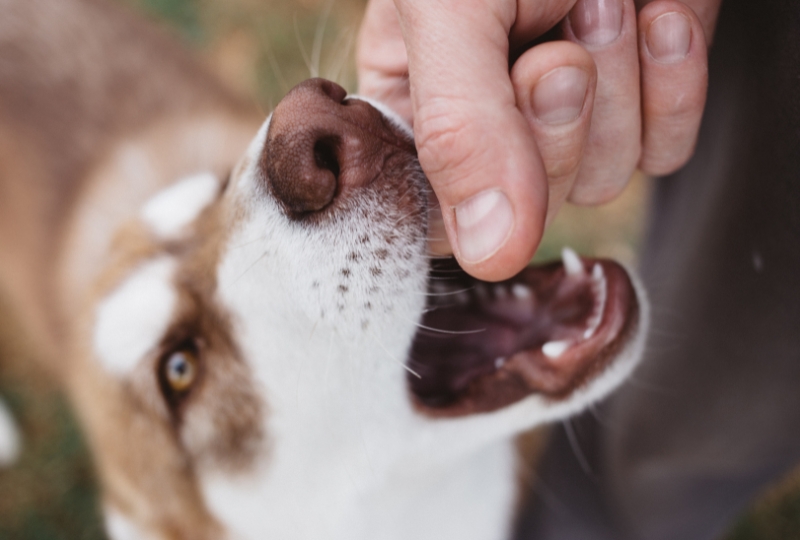
- Red, swollen, or bleeding gums. Healthy gums are pink and firm. Redness or bleeding when touched is a sign of gum inflammation.
- Excessive drooling. Some dogs drool more than usual when their mouth is painful or irritated.
- Dropping food or chewing on one side. Dogs rarely stop eating entirely, but they adjust to avoid discomfort.
- Pawing at the face or mouth. This behavior often signals oral pain that the dog cannot otherwise express.
If you notice any of these signs, contact your veterinarian promptly. Catching dog dental disease signs early gives your vet far more treatment options and protects your dog from unnecessary pain.
Why Do Dogs Develop Dental Disease?
Understanding the causes helps you reduce your dog’s risk before problems start.
The most direct cause is plaque that is not regularly disrupted. Without brushing or mechanical chewing, plaque hardens into tartar within 24 to 72 hours. Once tartar forms, it can only be removed by a veterinarian.
Breed and genetics play a significant role. Small breeds like Chihuahuas, Yorkshire Terriers, and Dachshunds have crowded teeth that trap food and bacteria more easily. Brachycephalic breeds such as Pugs and Bulldogs are also at higher risk due to jaw structure.
Age matters too. As dogs get older, years of plaque accumulation compound into more serious disease. Diet is another factor. Dry kibble provides some mechanical abrasion, but it is not a substitute for active pet dental care.
In our experience, dog bad breath causes are almost always dental in origin. Pet owners often tell us they assumed their dog just had “bad breath,” not realizing it was the first signal of active gum disease.
How Vets Diagnose and Treat Dog Dental Disease
If you bring your dog in with any of the signs above, here is what to expect:
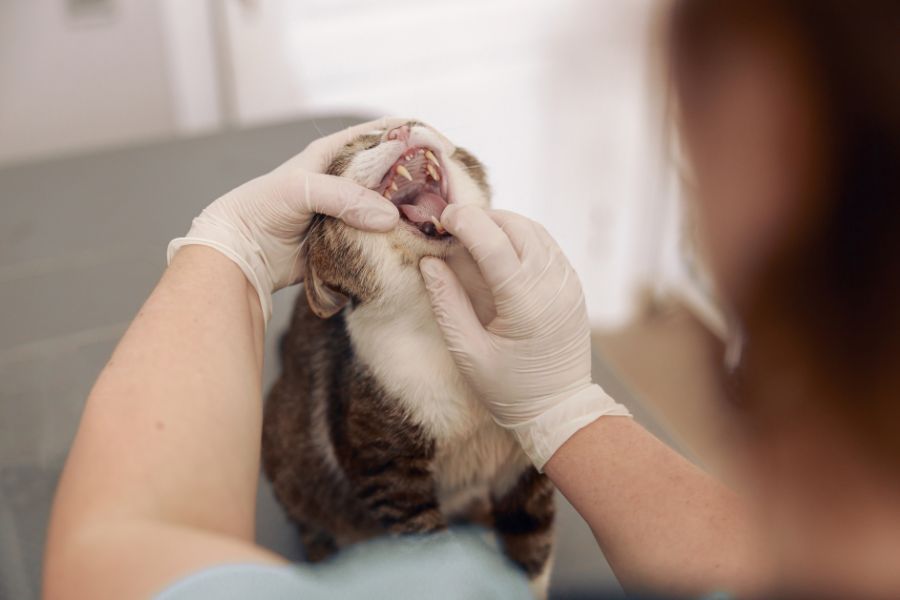
- Oral exam while awake. Your vet will visually examine the teeth, gums, and tongue for visible tartar, gum redness, and any obvious abnormalities.
- Dental X-rays under anesthesia. Most dental disease happens below the gumline and is completely invisible without imaging. X-rays reveal bone loss, root damage, and abscesses.
- Professional cleaning (dental prophylaxis). Under anesthesia, a veterinary team removes tartar and plaque above and below the gumline using ultrasonic scaling tools.
- Extractions if needed. Teeth with severe root damage, fractures, or significant bone loss are often safer to remove than to leave in place.
- Post-procedure care plan. Your vet will recommend a home care routine to slow future buildup.
One thing we see often in Bloomingdale: pet owners delay bringing dogs in because they worry about anesthesia. Modern veterinary anesthesia is very safe, and the risks of untreated dental disease, including bacterial spread to the heart, kidneys, and liver, are far greater than the procedure itself.
Dog tooth decay symptoms that are caught at stage one or two are usually fully treatable with a cleaning alone. Waiting until stage three or four often means extractions, longer recovery, and more complex treatment.
Pooler Veterinary Hospital provides comprehensive dental assessments and works with pet owners to create a clear, manageable plan for their dog’s oral health.
How to Catch Dental Disease Early and Slow Its Progression
Prevention starts at home and gets reinforced at every vet visit.
Here are four things you can do right now:
- Brush your dog’s teeth daily. Use a pet-safe toothbrush and enzymatic toothpaste. Never use human toothpaste. Even 30 seconds of brushing per session makes a measurable difference.
- Offer dental chews approved by the Veterinary Oral Health Council (VOHC). These are clinically tested to reduce plaque and tartar. Not all “dental treats” on the market are effective, so look for the VOHC seal.
- Schedule annual or biannual dental exams. Your vet can detect dog gum disease warning signs before they progress, often during a routine wellness visit.
- Do not wait for bad breath to get worse. Many dog owners assume dog bad breath will resolve on its own. They do not. Breath that smells persistently foul needs a veterinary evaluation.
A common misconception is that dogs on dry food do not need dental care. Kibble does not clean teeth the way brushing does. Proper dental care for dogs means combining home maintenance with regular professional cleanings, not one or the other.
We frequently remind our clients in Bloomingdale, GA that home brushing and professional cleanings work together. Neither replaces the other.
Conclusion
Dental disease is silent until it is not. By the time a dog shows obvious discomfort, the disease has often reached an advanced stage. Knowing the dog dental disease signs, from persistent bad breath and yellow tartar to red gums and face pawing, gives you the ability to act before real damage sets in. Annual wellness exams, home brushing, and VOHC-approved dental products are your first line of defense. For dogs already showing dog tooth decay symptoms or dog gum disease warning signs, a professional dental evaluation is the right next step. The team at Pooler Veterinary Hospital is here to help you protect your dog’s health from the inside out. Book an appointment today.
Frequently Asked Questions
Q: What are the early signs of dental disease in dogs?
Ans: Early signs include persistent bad breath, yellow or brown tartar buildup along the gumline, red or swollen gums, and excessive drooling. Some dogs also drop food or chew on one side to avoid discomfort.
Q: Is bad breath in dogs always a sign of dental disease?
Ans: Not always, but it is the most common cause. Persistent, foul-smelling breath that does not go away after eating is usually a sign of bacterial activity related to plaque, tartar, or gum disease. It warrants a veterinary exam.
Q: How is dog dental disease treated?
Ans: Treatment depends on the stage. Early-stage disease is treated with professional cleaning under anesthesia. Advanced cases may require dental X-rays to assess bone loss and extractions for damaged teeth.
Q: Can I prevent dental disease in my dog at home?
Ans: Daily brushing with pet-safe toothpaste is the most effective home prevention method. VOHC-approved dental chews also help reduce plaque. Home care slows disease progression but does not replace professional cleanings.
Q: How often should dogs get professional dental cleanings?
Ans: Most dogs benefit from a professional dental cleaning once a year. Small breeds and dogs already showing signs of disease may need more frequent cleanings. Your veterinarian will recommend the right schedule based on your dog’s specific needs.

Ready To Visit Us?
We proudly serve the pets of Pooler, Bloomingdale, Savannah, Port Wentworth, Guyton,
Chatham County, GA and the surrounding areas. At every stage of your pet’s life, we are dedicated to giving
them veterinary treatment of the highest quality.