info@poolervet.com
How Cold Laser Therapy Helps Pets Recover Faster After Surgery
Book Online
Your dog just came home from surgery. He is quiet and reluctant to move, and you can see the discomfort in his eyes. You followed every instruction, but watching him struggle through recovery feels helpless. That moment is exactly why more pet owners are asking about better options. Cold laser therapy pets are receiving today is changing what post-surgical healing looks like. This non-invasive treatment uses focused light energy to reduce inflammation, ease discomfort, and speed tissue repair at the cellular level. Whether your dog just had an orthopedic procedure or your cat recovered from a soft tissue surgery, laser therapy can be a powerful part of the healing plan. This article explains what cold laser therapy is, how it works, what the science supports, and when it makes the most sense for your pet.
What Cold Laser Therapy Actually Does for a Healing Body
Cold laser therapy, also called low-level laser therapy or photobiomodulation, uses specific wavelengths of light to stimulate healing inside the body’s tissues. The laser penetrates the skin and reaches muscles, tendons, and nerves below the surface. Once there, it activates a process inside the cells that increases energy production and reduces inflammation at the source.
This is not a heat-based treatment. The term “cold” refers to the fact that the laser does not generate enough heat to cut or cauterize tissue. It is completely non-invasive and painless. Most pets relax or even fall asleep during sessions.
Studies in veterinary medicine indicate that laser therapy can reduce post-surgical swelling by a meaningful margin and accelerate tissue repair compared to recovery without it. For pets who have undergone orthopedic procedures, soft tissue repairs, or even spays and neuters, this acceleration makes a real difference in comfort and healing time.
How Does Cold Laser Therapy Help Pets Recover After Surgery?
Cold laser therapy helps pets recover after surgery by reducing inflammation, blocking pain signals at the nerve level, and stimulating the cells responsible for tissue repair. Most pets show measurable improvement in mobility and comfort within two to three sessions.
The light energy absorbed during treatment triggers the mitochondria in cells to produce more ATP, the fuel cells use to function and repair themselves. This speeds up the natural healing process that surgery disrupts. It also increases circulation to the treatment area, which flushes out inflammatory byproducts and delivers oxygen and nutrients to recovering tissue.
Signs Your Pet May Benefit From Laser Therapy for Pets After a Procedure
Not every pet will show obvious signs of post-surgical discomfort, but that does not mean they are not experiencing it. Animals instinctively hide pain. Knowing what to watch for helps you advocate for your pet’s comfort.
Signs that suggest your pet could benefit from laser therapy for pets include:
- Reluctance to move or bear weight: Especially common after orthopedic surgery on a limb or hip.
- Licking or chewing at the incision site: Often a sign of localized irritation or nerve sensitivity.
- Loss of appetite after the first 24 hours: Persistent pain can suppress hunger well past the initial anesthesia phase.
- Stiffness when getting up: Inflammation around the surgical site makes rising uncomfortable.
- Whimpering or vocalizing at rest: A clear signal that pain management needs adjustment.
In our experience, pets who receive laser therapy as part of their recovery protocol are significantly less likely to disturb their incisions. That alone reduces the risk of infection and reopening.
If you notice any of these signs, contact your veterinarian promptly.
What to Expect During a Post-Surgical Laser Session at the Clinic
Laser therapy sessions are straightforward and calm. Here is a general overview of what happens at your visit:
- Your pet is settled on a comfortable surface. No restraints are needed for most pets. Sessions are typically done with the pet lying down or sitting quietly.
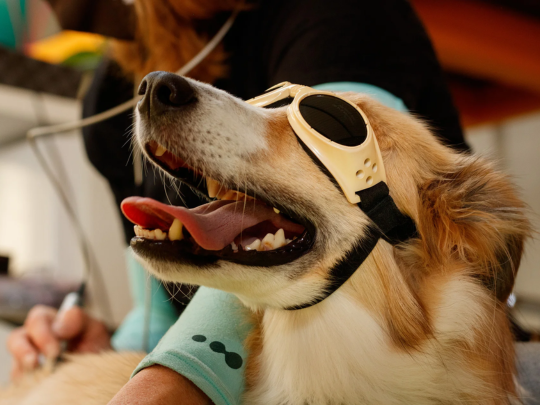
- Protective eyewear is placed on both your pet and clinic staff. The laser light requires eye protection as a precaution.
- The handheld laser device is moved slowly over the treatment area. The applicator never breaks the skin. Your pet may feel a mild warmth, but nothing painful.
- Session length depends on the area being treated. Most post-surgical sessions run between five and fifteen minutes.
- Your pet goes home the same day. There is no recovery time needed after a laser session.
Most post-surgical protocols in Bloomingdale, GA involve a series of sessions scheduled over two to four weeks, with frequency tapering as healing progresses. Your veterinarian will build a schedule based on the type of surgery, your pet’s size, and how they respond to initial treatments.
Pain Relief for Pets Without Relying Solely on Medication
One of the most common questions we get from pet owners is whether their pet will need pain medication for an extended period after surgery. The honest answer is: not always, especially when cold laser vet treatment is part of the plan.
Laser therapy provides measurable pain relief for pets by interrupting the signaling that inflamed nerves send to the brain. It does not replace medication entirely in the early days following a procedure, but it reduces how much medication a pet needs and for how long. For older pets, pets with kidney or liver sensitivities, or any animal for whom long-term NSAID use carries risk, this is a significant benefit.
Pet owners often tell us they were surprised by how quickly their dog or cat seemed like themselves again after starting laser sessions. That improvement is not a placebo effect on the owner’s part. It reflects real changes in the tissue and nervous system that the treatment drives.
It is worth noting that many pet owners assume a quiet, still pet after surgery means the pet is fine. In reality, stillness is often a coping response to discomfort. Cold laser vet treatment addresses that underlying discomfort rather than letting the pet simply endure it.
Dog Recovery After Surgery: What Supports the Best Outcomes
For dog recovery after surgery, laser therapy works best as part of a broader care plan. Here are four practices that consistently support faster, smoother healing:
- Restrict activity as directed. Even a dog who feels better after laser sessions needs to follow the movement restrictions your vet prescribes. Feeling better does not mean healed.
- Keep the incision clean and dry. Check it daily. Redness, discharge, or swelling that worsens after the first 48 hours warrants a call to your vet.
- Stick to the laser session schedule. Skipping sessions in the middle of a protocol reduces the cumulative benefit. Consistency matters.
- Monitor appetite and bathroom habits. Changes in either can indicate that pain is not adequately managed or that a complication has developed.
Pet surgery recovery tips from our team always include this reminder: the recovery phase is not the time to test how much your pet can handle. A controlled, supported recovery prevents setbacks that can extend healing by weeks.
Pooler Veterinary Hospital offers cold laser therapy as part of individualized post-surgical recovery plans designed to get your pet back to full comfort and mobility as efficiently as possible.
Conclusion
Post-surgical recovery does not have to mean days of visible discomfort and slow progress. Cold laser therapy pets receive after surgery targets the root causes of pain and delayed healing, including inflammation, poor circulation, and cellular damage. Sessions are painless, fast, and safe for pets of all ages and sizes. Combined with proper rest and attentive home care, laser therapy gives recovering pets a meaningful advantage in getting back to their normal lives. At Pooler Veterinary Hospital, our team is ready to discuss whether cold laser therapy is the right addition to your pet’s recovery plan. Book an appointment today.
Frequently Asked Questions
Q: How many laser therapy sessions does a dog need after surgery?
Ans: The number of sessions depends on the type of surgery and how your pet responds to treatment. Most post-surgical protocols involve three to six sessions over two to four weeks, with your veterinarian adjusting frequency based on progress.
Q: Is cold laser therapy safe for cats after surgery?
Ans: Yes, cold laser therapy is safe for cats. It is non-invasive, requires no sedation, and is well tolerated by most cats. Your veterinarian will confirm whether it is appropriate based on your cat’s specific procedure and health status.
Q: Can laser therapy replace pain medication after surgery?
Ans: Laser therapy reduces the amount and duration of pain medication many pets need, but it is not always a complete replacement, particularly in the first few days after a procedure. Your vet will determine the right pain management combination for your pet.
Q: How soon after surgery can my pet start laser therapy?
Ans: In many cases, laser therapy can begin within 24 to 48 hours after surgery. Your veterinarian will determine the appropriate start time based on the procedure performed and your pet’s initial recovery.
Q: Does cold laser therapy hurt pets?
Ans: No, cold laser therapy does not hurt. The treatment is painless, and most pets remain calm or even relax during sessions. There is no heat, no needles, and no recovery time required afterward.
Related Articles

Ready To Visit Us?
We proudly serve the pets of Pooler, Bloomingdale, Savannah, Port Wentworth, Guyton,
Chatham County, GA and the surrounding areas. At every stage of your pet’s life, we are dedicated to giving
them veterinary treatment of the highest quality.